
Bring muscle-activation data into return-to-play decisions
BioSensr tracks muscle activation during standardised isometric hamstring holds and compares results against athlete-specific baselines. Coaches and performance professionals can review activation changes across sessions to complement their existing assessments.
A muscle-specific view for return-to-play decisions
Sports teams use GPS, force platforms, and dynamometry to measure workload and output. BioSensr adds muscle-specific surface electromyography (sEMG) to quantify muscle activation during a standardised isometric hamstring hold. The platform tracks these activation measurements over time, comparing each session against athlete-specific baselines.
The BioSensr™ platform
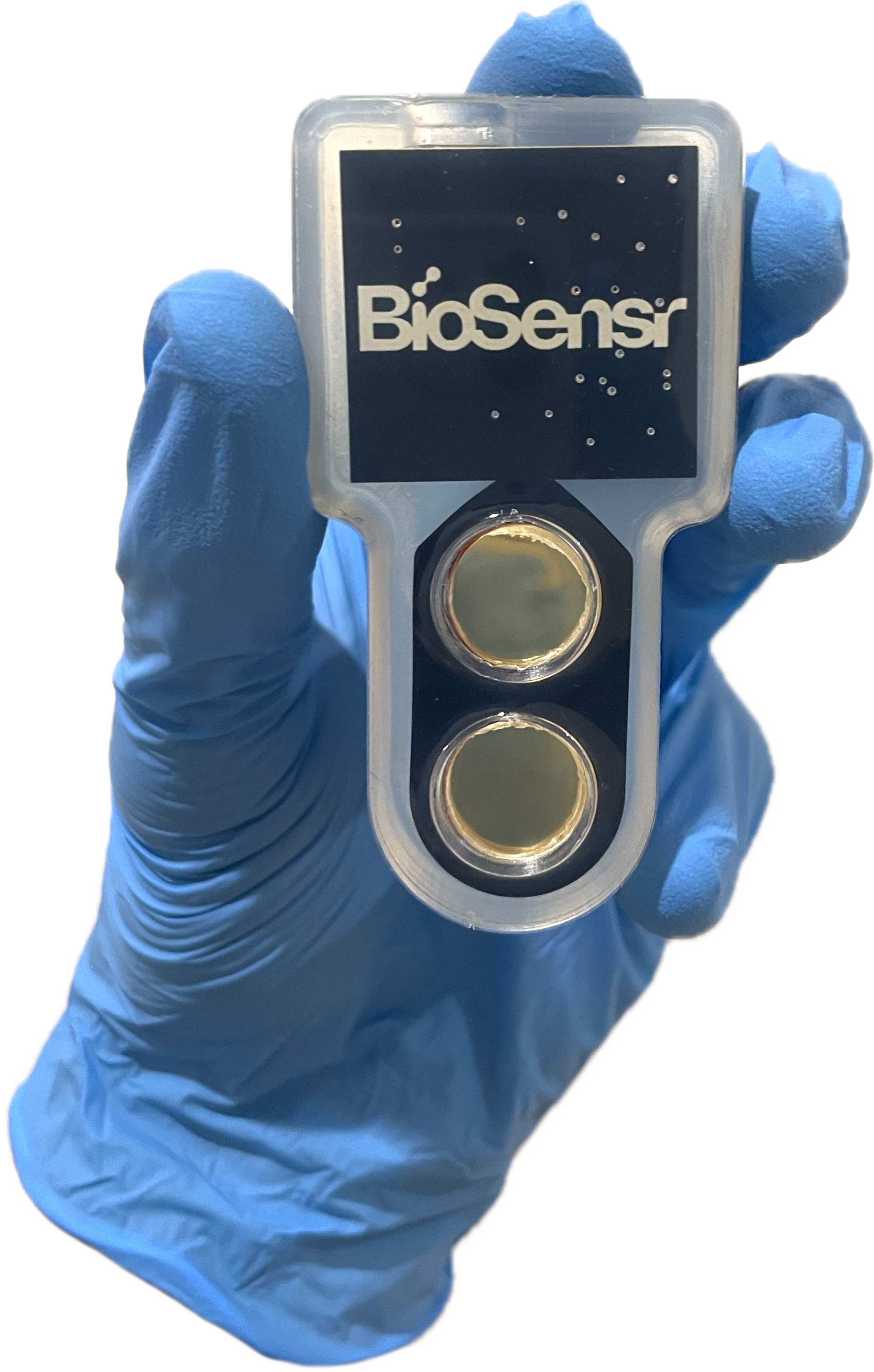
The Wearable
Flexible surface electromyography (sEMG) sensors engineered to quantify precise, muscle-specific activation.
Software & Insights
Real-time activation streaming, baseline comparisons, and automated trend tracking to guide training load and return-to-play decisions.
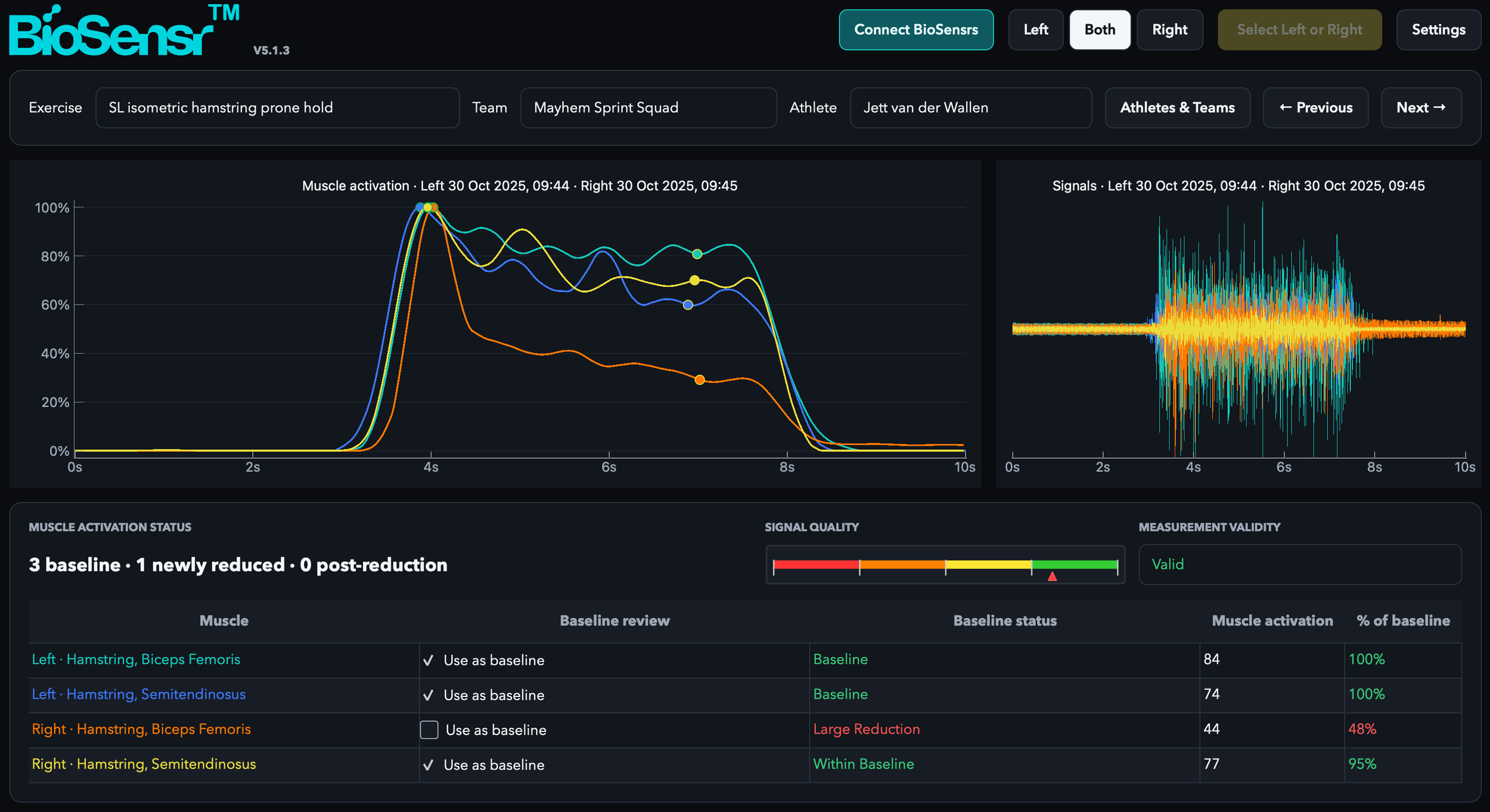
Create your account, request a trial and download BioSensr Software.
A category without direct competition
| Capability | GPS / Athlete Tracking | Force / Dynamometry | Research EMG | BioSensr™ |
|---|---|---|---|---|
| Field deployable | Yes | Partial | No | Yes |
| Muscle-specific activation | No | No | Yes | Yes |
| Muscle load & fatigue tracking | No | No | Partial | Yes |
| Return-to-play trend monitoring | No | No | No | Yes |
| Scalable software platform | Yes | No | No | Yes |
| Research-grade accuracy | No | Yes | Yes | Yes |
Hamstring tracking
RIGHT BICEPS FEMORIS — ELITE BEACH SPRINTER
During peak training, this elite beach sprinter’s right biceps femoris muscle activation was monitored using BioSensr to track recovery trends and help manage training loads. Percentages show measurements relative to the athlete's baseline. BioSensr displays numerical differences and categorises changes as Improving, Stable, or Declining. These metrics describe data trends only and do not indicate a medical condition or determine readiness to play.
Research and field evaluation

Built on a foundation of clinical rigour and elite performance execution, our underlying data architecture is being actively validated through a longitudinal research study in partnership with The University of Sydney, while undergoing real-world validation through on-field pilot program deployment with the Manly Warringah Sea Eagles.
Partner with the Future of Human Performance
Patent Portfolio
Patents pending across seven major jurisdictions, including the United States, Canada, the European Union, the United Kingdom, and Australia.
Software & Hardware Platform
Combines reusable sEMG hardware with scalable software for baseline comparison, muscle activation tracking, and trend analysis.
Sports Market Focus
Engineered specifically for professional and semi-professional sports organisations, performance staff, and elite athletic programs.