
Eliminate guesswork from return-to-play decisions
Stop guessing when athletes are ready to return to the field. BioSensr quantifies neuromuscular fatigue to give sports teams a clear view of athlete readiness, helping support safer return-to-play decisions and optimise performance when it matters most.
The Return-to-Play Blind Spot
Traditional clearance relies on gross mechanical force and indirect metrics like GPS, force plates, and dynamometry. While valuable, they fail to track muscle-specific recovery or detect underlying neural exhaustion. This blind spot leaves athletes highly vulnerable during their first 60 days back on the pitch, directly driving the industry's high repeat injury rates.
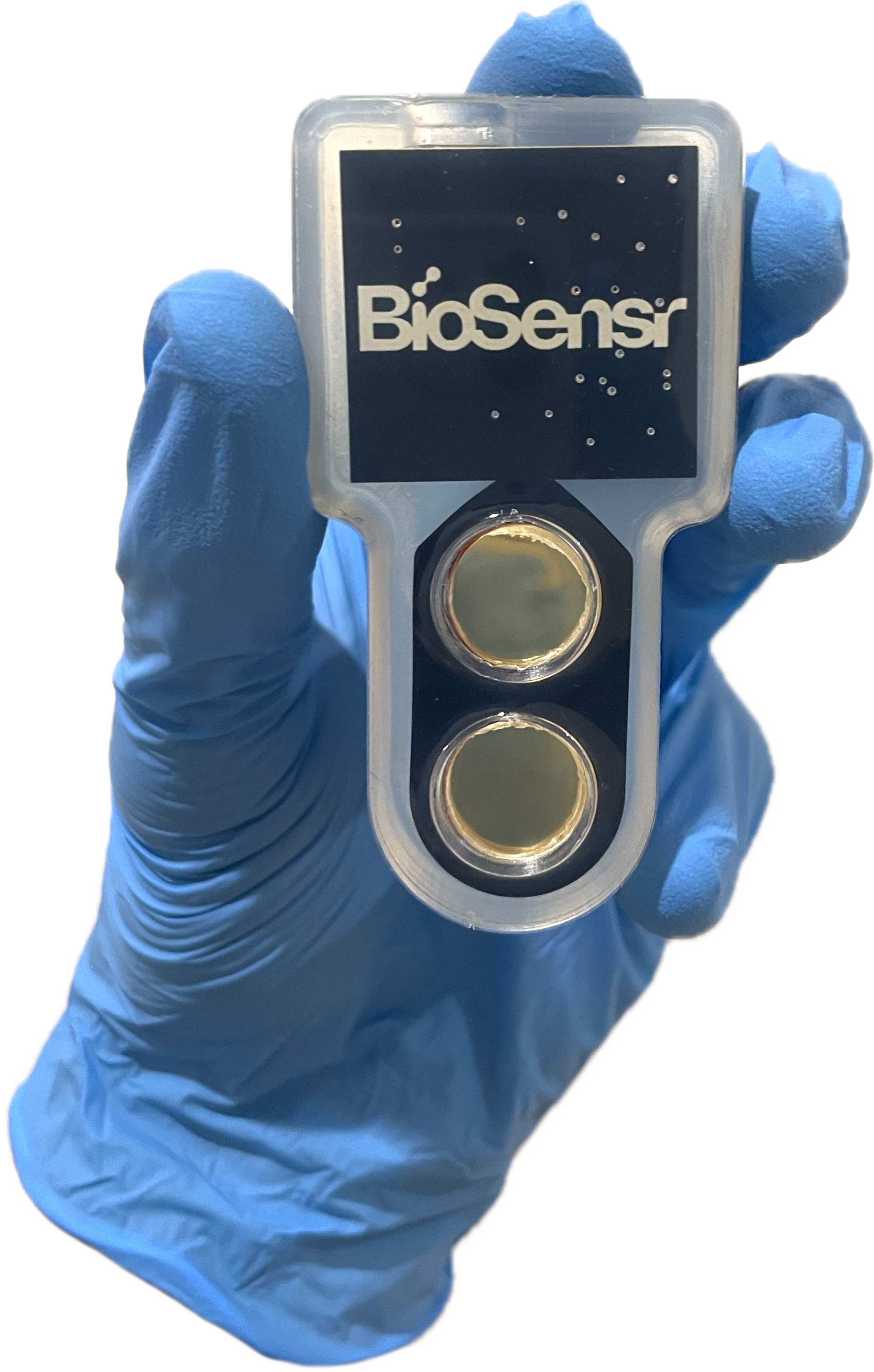
The Wearable
Patented flexible, skin-stable sEMG sensor capturing active muscle firing data
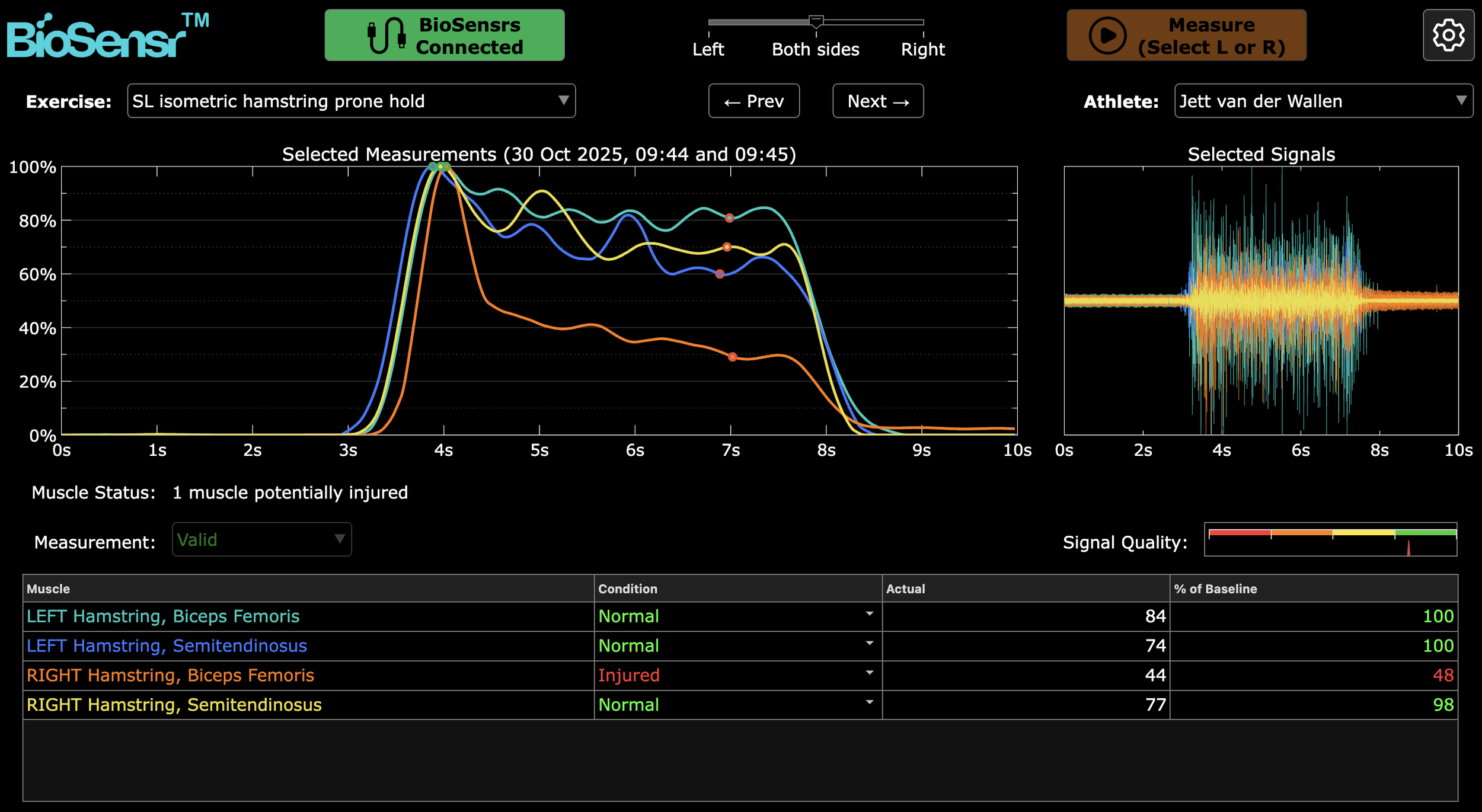
The Software
Real-time tracking of neural activation patterns and fatigue levels
The Output
Objective, data-backed clearance metrics protecting vulnerable players from premature return-to-play
The BioSensr™ Platform
A Category Without Direct Competition
| Capability | GPS / Athlete Tracking | Force / Dynamometry | Research EMG | BioSensr™ |
|---|---|---|---|---|
| Field deployable | Yes | Partial | No | Yes |
| Muscle-specific measurement | No | No | Yes | Yes |
| Fatigue/injury classification | No | No | Partial | Yes |
| Return-to-play validation | No | No | No | Yes |
| Scalable B2B SaaS | Yes | No | No | Yes |
| Research-grade accuracy | No | Yes | Yes | Yes |
Case Study: Uncovering the Hidden Recovery Gap
ON-FIELD DATA DEPLOYMENT
During real-world professional athletic monitoring, conventional strength metrics and subjective readiness scales often signal an early, superficial recovery.
Early recovery (~70-80%) can be rapid, but true neuromuscular restoration (~95%) is often significantly delayed.
Without quantitative clearance, performance and medical staff are left blind to hidden deficits – unknowingly clearing elite players for full competitive exposure while still operating inside high-risk re-injury windows.
Validated by Elite Sports Organisations

Built on a foundation of clinical rigor and elite performance execution, our underlying data architecture is actively validated through a longitudinal research study in partnership with The University of Sydney, while undergoing real-world validation through on-field pilot program deployment with the Manly Warringah Sea Eagles.
Partner with the Future of Human Performance
IP Protected
Patent pending in 7 global jurisdictions (including USA, Canada, EU, UK, AU).
Scalable SaaS Architecture
Combining lightweight hardware with a high-margin, recurring software subscription revenue model.
Massive Addressable TAM
Targeting over 20,000 professional and semi-professional elite sports teams worldwide.